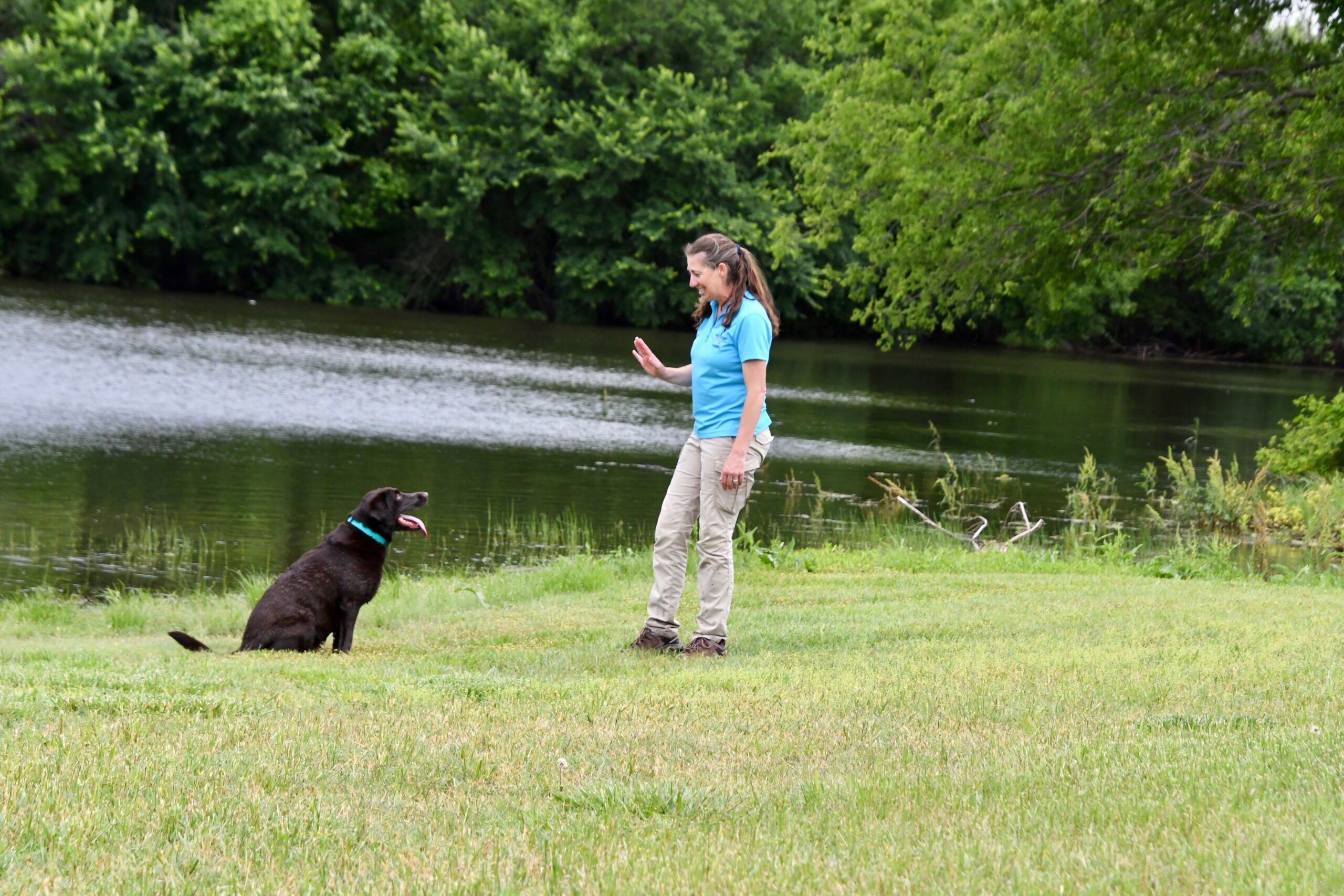
In order to succeed and have that amazingly well trained dog, you have to break things down into realistic goals. Set you and your dog up for success, go slow and steady, put the training in and be patient, and you will succeed. To help you understand this concept, let’s look at the magic 4 “Ds” of dog training. If you follow this rule you will do well, I promise!
D #1 – Duration
This is about how long you train for. Time. Seconds, minutes. For puppies or any dog, start off with seconds and then progress. You can’t expect an 8 week old puppy to do a sit/stay for more than a couple of seconds to begin with, for example. Or an adult dog to walk to heel for longer than 30 seconds on your first training session, for example. So, get your head around how long you should train for based upon your dog’s concentration levels. Less is more. Start short and increase time as your dog learns.
D #2 – Distractions
This is to do with how many distractions there are around your dog. Zero distractions would be at home, in a quiet room, no toys lying around, no other noise or movement. Upping this a stage might be in the front room where there are a couple of toys on the floor and a family member pottering about. Progressing from here could be in in the garden with no other people or noises, then moving onto dogs barking in the distance, birds flying over, squirrels in the trees. You might do your loose lead in the house then the garden then the street on a quiet day then during rush hour for example. In the park it would be no people or dogs, then progressing to the odd person and dog or jogger, cyclist, then increasing the numbers as you go.
D #3 – Distance
Distance is about how far you are from your distractions. Is the dog running in the distance, 50 meters away, or is it running right past you and your dog? Is the squirrel on the fence or is it higher up in a tree? Are you walking on the opposite side of the butchers, or are you walking right past the butchers front door? Is the flock of seagulls in the field away from you or are they 10 meters away? Setting your dog up to succeed means starting off with lots of distance then gradually getting closer to your distractions.
D #4 – Difficulty
This is a combination of all of the above really. How hard is the task you are setting? I would not expect an adolescent dog to do a perfect heel walking close past a pack of off lead dogs (distance and distractions) just meters away while you have already done 40 mins of training (duration). Make the whole exercise achievable, it is better to quit on something easy then to push on and get a fail. We should always finish on a positive.
So, before you go out training with your dog, think about what you are doing, how you are going to do it, where you will do it, how long you will do it for and monitor your dog for signs of stress or happiness, and let that guide you how you continue your session.
For an example, it will take you a few weeks to get your puppy to do a 30 min down stay!!
Training should be fun for you and your dog, go have some fun!